
Does an Airport Transfer Wait If Your Flight Is Delayed
The Moment That Decides Everything
A flight lands two hours late into Phoenix Sky Harbor. Bags take another twenty minutes to hit the carousel. The traveler walks out to arrivals expecting a ride that vanished with the original pickup window, or one that's still there because someone was actually watching the flight the whole time. That difference, whether the ride was tracking the plane or just tracking the clock, is the real question behind "does an airport transfer wait if your flight is delayed."
How Flight Tracking Actually Works
Commercial flights broadcast live position and status data that flows into public flight-tracking tools the moment a plane pushes back from the gate. A driver watching that feed sees a delay the same way the airline's own ops desk does: gate changes, a hold on the tarmac, a diversion, all update in near real time. That's different from a driver who was only ever given a scheduled arrival time and has no way to know the flight is now landing at 9:40 instead of 7:15. The tracking is what turns "your flight is delayed" from a problem into a non-event.
Why the Two-Hour Ride North Changes the Stakes
A Sky Harbor arrival isn't the end of the trip for most travelers heading to Sedona or Flagstaff; it's the start of a two to two-and-a-half-hour drive north on I-17. A driver who's already on-site and adjusting to a delay is a very different experience than discovering, after landing late, that the ride has moved on and a new one has to be arranged before that long drive can even begin. The longer the leg after the airport, the more a missed pickup costs in lost time at the other end.
What a Fixed-Window Transfer Desk Does Instead
Larger transfer services and some rideshare-style airport desks operate on a set arrival window: your ride is released back into the queue if you don't show up within a set number of minutes past the scheduled landing time, regardless of why you're late. That system works fine for an on-time flight. It falls apart for the passenger stuck on a plane that sat on the tarmac for forty minutes waiting for a gate, because nobody on the ground side was watching the actual status, only the original schedule. Some of those services also charge a wait fee once that window closes, which turns a flight delay, something entirely outside the traveler's control, into an extra cost on top of an already stressful arrival.
Meet-and-Greet: What It Looks Like in Practice
A meet-and-greet pickup means the driver is inside the terminal, usually near baggage claim, holding a name sign, rather than waiting curbside among a lineup of rideshare cars expecting the traveler to spot them. For a delayed or overnight arrival, that matters twice over: it removes the stress of finding a driver in an unfamiliar terminal, and it puts a person on the ground who can adjust to a gate change or a baggage delay without a phone call back and forth.
Baggage Claim Adds Its Own Delay
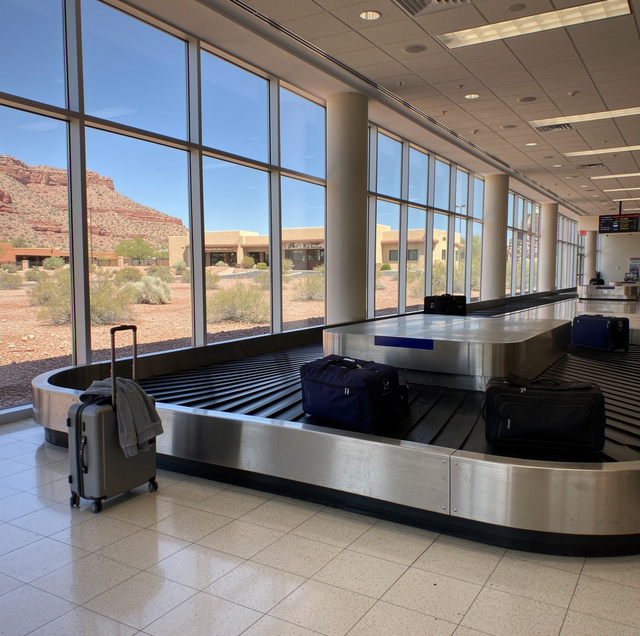
Landing on time doesn't mean walking out on time. Checked bags can take anywhere from ten to forty-five minutes to reach the carousel depending on how busy the ramp is, and that gap is often longer than the flight delay itself on a busy travel day. A driver tracking the flight status accounts for this last stretch too, rather than starting a countdown the second wheels touch down.
Red-Eyes, Connections, and Late-Night Arrivals
Overnight and early-morning arrivals carry their own version of this problem. A traveler landing at 1 a.m. after a missed connection rebooked them onto a later flight needs a driver who's still tracking that new flight number, not the one from the original itinerary. Because the pickup at Sky Harbor is only the first leg of a longer drive into the Verde Valley or Flagstaff, an overnight adjustment on the front end can otherwise turn into a stranded traveler at an hour when taxis and rideshare in northern Arizona are hardest to find.
What Coordinating Multiple Arrivals Adds to the Picture
The same tracking mechanism scales to groups landing on separate flights for a shared trip, weddings and family reunions being common examples. A driver watching several flight numbers at once can sequence pickups so nobody waits an unreasonable amount of time at the curb, and can flag early if one flight's delay means reshuffling the pickup order rather than everyone arriving to find no ride at all.
How This Differs From a Rideshare App's "Flight Tracking"
Some rideshare apps advertise flight tracking too, but what that usually means is the app delays the driver-match request until close to the estimated new landing time, not that a specific driver has been watching that flight number since departure. The practical difference shows up when a flight lands at an odd hour or a different concourse than expected: an app is matching a new driver cold, while a private transfer already assigned to that pickup has been following the same flight the entire time and is already positioned near the right terminal.
Communication Once the Drive North Begins
Sky Harbor pickup is only step one. Once the ride heads north on I-17 toward Sedona, Flagstaff, or the Verde Valley, cell coverage gets patchy in stretches, particularly climbing toward the Mogollon Rim. That's a reason to confirm any last-minute plan changes, a different drop-off address, an extra stop, before leaving the airport rather than assuming a text will go through thirty minutes into the drive. A driver who tracked the flight and met the delay in the terminal has already closed the loop on the trip's biggest variable before that signal gap becomes a factor.
Why This Matters More for First-Time Visitors
A traveler who's driven this route before knows Sky Harbor's terminal layout and roughly what a delay means for the rest of the evening. A first-time visitor, especially one landing late at night after a long multi-leg flight, doesn't have that context, and a fixed-window transfer that released the ride twenty minutes ago leaves them figuring out ground transportation in an unfamiliar airport at an hour when options thin out fast. Meet-and-greet service removes that unfamiliarity from the equation entirely, since the traveler doesn't have to find anything: the driver already found them.
Frequently Asked Questions
Sharing the updated flight number and confirmation as soon as a change happens lets the driver retrack the new arrival immediately; most delays and rebookings show up in tracking within a few minutes of the airline updating its own systems.
A diversion changes the pickup location entirely, so this is one case that needs a phone call rather than relying on tracking alone, since a plane diverted to, say, Tucson isn't landing at Sky Harbor at all.
A late arrival can shift departure into evening hours, which matters on I-17 in winter when road conditions near Flagstaff change after dark; a driver adjusting for a delay is also adjusting for what the drive north looks like at that hour.
Extremely long delays, several hours or more, are typically handled with a quick check-in call to confirm the new plan still works for both sides, rather than an automatic cutoff.
At Sky Harbor, the terminal itself adds a variable most travelers don't think about: Terminal 4's international arrivals and its farthest concourse gates can mean a longer walk before a bag even reaches the carousel, on top of the ordinary wait for the ramp crew to unload it. A driver factoring in baggage claim is really tracking two separate clocks, the walk from the gate and the wait at the belt, rather than one flat estimate.
International arrivals add customs and immigration processing on top of baggage claim, which can run considerably longer than a domestic arrival; tracking the flight doesn't shorten that process, but it does mean the driver isn't clocking a no-show while a traveler is still standing in a customs line.
Landing late is stressful enough without wondering if the ride home evaporated somewhere over New Mexico. The difference between a service watching the actual flight and one watching only the clock is the difference between a delay that costs a few extra minutes and one that costs the rest of the night.
Book a Sky Harbor pickup that tracks your actual flight, not just the schedule — arrive late and still find your ride waiting. Western Express Shuttle Service and Tours serves Sedona, Flagstaff, Phoenix Sky Harbor, and northern Arizona's Verde Valley and Rim Country. Call (928) 202-4071.
