
How to Arrange Wedding Guest Transportation in Sedona
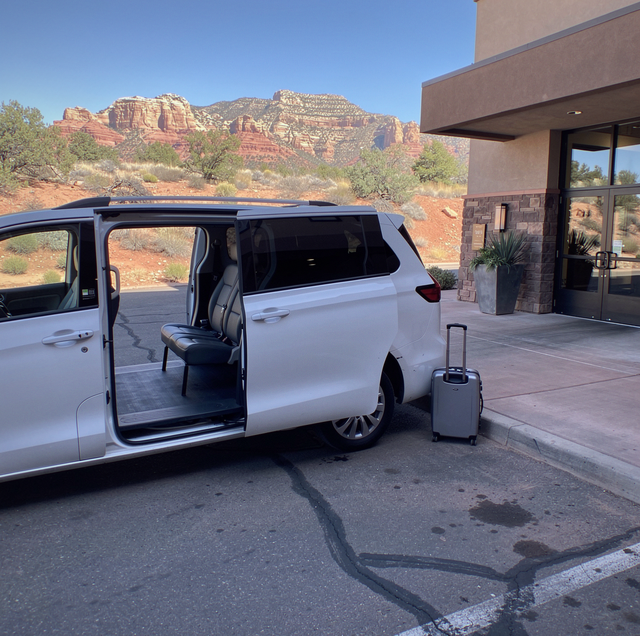
The Problem Sedona Weddings Create on Their Own
A red-rock venue outside Sedona looks perfect in every photo and creates a logistics problem the moment fifty guests need to get there at once. Many of these venues sit at the end of narrow, winding roads with parking for a fraction of the guest list, and they're often twenty or more minutes from the hotels where out-of-town guests are staying. Add in a region where rideshare coverage is thin even on an ordinary evening, and a couple planning their own timeline can find that the biggest risk to the schedule isn't the weather or the caterer. It's fifty people trying to find their own way to a ceremony that starts at a fixed time.
Why Rideshare Doesn't Solve This
Sedona and the surrounding Verde Valley don't have the rideshare density of a city. Drivers are fewer, response times are longer, and demand spikes hard around a single event ending at the same time, exactly when a wedding reception lets out, and fifty guests open their apps at once. A venue with limited parking makes this worse: guests can't simply drive themselves and park, so the plan has to solve for getting a large group somewhere on time without depending on an app that might show a ten-minute wait turning into forty.
The Mechanism: Grouped Runs Instead of Individual Rides
A shuttle-loop approach solves the math differently than booking 50 individual rides. Instead of coordinating dozens of separate pickups, one or a few larger vehicles run a fixed loop between a hotel or a small number of pickup points and the venue, on a schedule timed to the ceremony and reception. Guests board when their loop arrives rather than each needing their own ride confirmed and tracked, which removes the coordination burden from the couple and the compounding risk of an individual rideshare running late.
Spacing Arrivals So the Ceremony Isn't Held Up
Ceremony start times don't wait well for stragglers, so the loop schedule usually front-loads: an earlier run brings guests who want time to settle in and take photos, and a second, closer-to-start run catches anyone running later. That spacing matters more at a red-rock venue than a hotel ballroom, because there's often no easy overflow parking or a quick walk-in option if a group arrives after the processional starts.
Reception Drop-Off Is a Different Problem Than Ceremony Drop-Off
Ceremony and reception sometimes happen at the same site and sometimes don't, and even when they do, the flow of guests changes completely once dinner service starts. A ceremony drop-off wants everyone to arrive within a tight window before a fixed start time; a reception often wants a rolling return throughout the night as guests choose to leave early, stay for dancing, or head back to a hotel at different points. Planning the return trips as an open loop, running periodically rather than as a single mass departure, avoids 50 people trying to leave in the same 15 minutes at 11 p.m.
Sizing Vehicles to the Actual Guest List
A single large-capacity vehicle isn't always the right call. A guest list split across two properties, or a wedding party needing a separate, earlier vehicle from the general guest list, often works better with two or three right-sized vehicles running coordinated loops than one oversized vehicle trying to serve every pickup point on one route. Matching vehicle count and size to how the guest list is actually distributed, rather than defaulting to the largest available vehicle, usually keeps the loop timing realistic. A smaller van running two tight back-to-back loops can sometimes clear a guest list faster than a single large vehicle waiting to fill every seat before departing, depending on how spread out the pickup points are.
Bridal Party and VIP Timing Are Their Own Line Item
The wedding party, immediate family, and any VIP guests typically need transportation on a separate timeline from the general guest shuttle, arriving earlier for photos or needing to leave a reception before the main loop's last run. Treating this as its own small booking, rather than folding it into the general guest shuttle, avoids the awkward scenario of the couple waiting on a shuttle that's still finishing a guest loop across town.
Backup Planning for Narrow Roads and Weather
Many Sedona-area venue roads are single-lane or close to it, which means a stalled vehicle or a slow-moving group ahead can back up an entire loop's schedule. Building a little slack into the loop timing and having a driver who knows an alternate route if one exists matters more here than on a wide city street. On some Verde Valley properties, that alternate route runs an extra ten minutes longer but avoids a single-lane bridge or a hairpin turn that a full-size shuttle handles poorly, which is worth scouting before the wedding day rather than learning about it mid-loop. Summer monsoon storms and, less often, winter weather can also affect road conditions on these routes, which is one more reason a fixed loop schedule should have some cushion rather than running back-to-back with no margin.
Coordinating With the Venue and Wedding Planner
Most Sedona-area venues have dealt with guest transportation before and can share specifics that shape the loop plan: how many vehicles can actually turn around in the venue's drop-off area at once, whether there's a designated waiting spot for shuttles between runs, and what time the access road opens for vendor and guest traffic. A wedding planner or venue coordinator sharing that detail ahead of time saves a driver from discovering it cold on the wedding day, which is exactly the kind of surprise a tight ceremony schedule can't absorb.
Building the Loop Schedule Backward From the Ceremony
The most reliable way to set pickup times is to start from the ceremony's actual start time and work backward: allow time for the drive itself, the venue's access road, and a buffer for guests boarding a few minutes later than planned, then set the last pickup loop far enough ahead that a small delay doesn't turn into a late ceremony. Working forward from a guessed pickup time instead, and hoping it lands on schedule, is how a fifteen-minute cushion quietly disappears.
Frequently Asked Questions
Popular Sedona wedding dates, especially in spring and fall, are often booked out months ahead, and vehicle availability for a specific date can be tighter than the venue itself, so this is worth arranging as soon as the guest count and hotel block are set.
Many planners build the first pickup loop around 30 to 45 minutes before the invitation time listed on the invitation, since that's earlier than the actual ceremony start and allows for the venue's narrow access road.
A missed loop usually means waiting for the next scheduled run rather than an on-demand pickup, which is why communicating the loop schedule clearly to guests in advance, not just the ceremony time, matters as much as booking the vehicles.
Yes, but geography matters more than guest count. Hotels clustered in uptown Sedona, West Sedona, and the Village of Oak Creek can be 15 to 20 minutes apart, so a loop that tries to cover all three adds real drive time between pickups. Steering the room block toward one or two of those areas when it's first set, rather than after the fact, is usually what keeps the eventual loop tight enough to trust.
Usually, and the timing gap is often bigger than couples expect: a wedding party heading to a separate photo location first- Airport Mesa and the Red Rock Loop are common choices around Sedona- may need pickup as much as two hours ahead of when the general guest shuttle even starts its first loop. That gap is usually enough on its own to rule out folding both groups into one vehicle and one schedule.
Rain changes more than drive time on some Verde Valley properties: a handful of venue driveways are unpaved or graded dirt rather than pavement, and a summer downpour can turn that surface slick enough that a shuttle has to slow well below its usual pace or, in the worst case, use a different vehicle with more ground clearance than it would on a dry day. Flagging that possibility with the venue ahead of time, not the morning of, is what keeps a storm from turning into a scheduling emergency.
Guest transportation isn't the part of a Sedona wedding couple's picture while touring venues, but it's often the piece that decides whether the day feels calm or rushed before the first toast is ever raised. Build the loop backward from the ceremony time, not the other way around, and it stops being a variable at all.
Book grouped wedding guest transportation for your Sedona venue — one coordinated loop instead of fifty separate rides. Western Express Shuttle Service and Tours serves Sedona, Flagstaff, Phoenix Sky Harbor, and northern Arizona's Verde Valley and Rim Country. Call (928) 202-4071.
