
Getting to Jerome Without the White-Knuckle Switchbacks
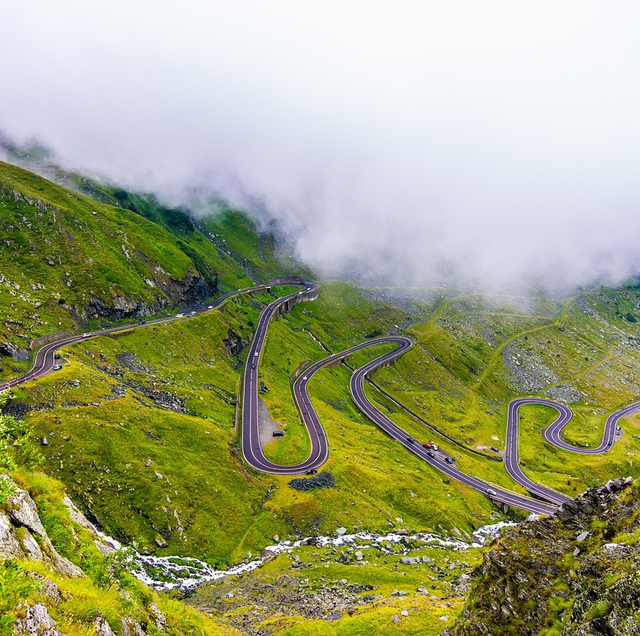
Quick Answer: You do not have to drive the winding switchbacks up Cleopatra Hill to get to Jerome. A private driver can handle the road for you, and that turns the whole day easy.
The first time the road to Jerome shows its hand, you are already committed. State Route 89A leaves the Verde Valley floor gently enough, then tips upward and starts folding back on itself, one blind switchback stacked above the last, with the hillside dropping away past the guardrail and the old mining town clinging to the slope somewhere above your windshield. Drivers used to flat freeways tend to grip the wheel a little tighter up here. If the winding climb up Cleopatra Hill is the part of a Jerome day you have been quietly dreading, you are not alone, and you do not actually have to be the one at the wheel.
Jerome earns the effort. It is a copper-boom town turned artist colony, perched more than a thousand feet above the valley on the side of Mingus Mountain, with galleries, tasting rooms, and one of the best long views in central Arizona. The catch is that everything special about its setting, the height, the grade, the hairpin streets, is also what makes both the drive and the parking a real test. Knowing what the road is like before you go, and settling early on who is driving it, is what turns a nerve-wracking outing into an easy one.
What the Drive to Jerome Is Actually Like
Jerome sits at roughly 5,200 feet on Cleopatra Hill, well above the Verde Valley floor that spreads out below it. There is only one way in by car, State Route 89A, and it reaches the town by climbing the hillside in a run of switchbacks and hairpin turns rather than any gradual, easy grade. The lanes are narrow, the shoulder disappears in places, and the drop past the guardrail is the kind that pulls your eyes away from the road right when you most need them on it.
The town itself does not let up once you arrive. Jerome is built in tiers up the slope, so its streets are switchbacks too, stacked one above another, and the highway threads straight through the middle of it. You are steering tight corners while pedestrians cross, cars back out of angled spaces, and a motorcycle waits behind you. For a first-time visitor taking in the scenery, that is a lot to manage at once, which is exactly why so many people arrive at the top a little frazzled rather than relaxed.
The Verde Valley Side and the Prescott Side Are Two Different Climbs
Where you start changes the drive completely. From Cottonwood and Clarkdale in the valley below, the pull up to Jerome is short, only about seven miles, but it is all switchbacks gaining elevation fast. From Sedona, you are looking at roughly forty-five minutes to an hour once you cross the valley and start up the hill.
Coming from Prescott is a different animal. That approach carries 89A up and over Mingus Mountain, where the pass tops out around 7,000 feet, then drops down toward Jerome on a long series of tight curves. It is the higher, more sustained mountain crossing of the two, with more switchbacks and steeper grades, and it is the side most likely to see ice or snow in the colder months. If anyone in your group is uneasy about mountain roads, the Mingus Mountain side tends to test them. A driver who runs both approaches year-round knows which one suits the day and the conditions.
Parking Is the Second Half of the Problem
Getting up the hill is only the first challenge. Because Jerome is stacked on a slope, flat ground is scarce, and parking is tight, especially on weekends when the town fills. There are a handful of small public lots and some on-street spaces along Main Street and Hull Avenue, but they turn over slowly, and on a busy afternoon you can spend a real chunk of your visit circling for a spot.
What parking there is comes with its own quirks. Much of it sits on a grade, so you curb your wheels and set the brake hard, and a few blocks run one way in a manner that is easy to miss when you are watching for a space. Larger vehicles and anything towing do not fit the corners in the town center. Between the climb and the hunt for a place to leave the car, plenty of visitors have used up their patience before they have seen a single gallery.
Why a Private Driver Turns Jerome Into an Easy Day
This is where handing off the driving changes the whole shape of the day. With a private driver, the switchbacks stop being your problem. Someone who runs these roads regularly takes the corners smoothly while you look out at the view instead of white-knuckling the wheel, and you step out at the top calm rather than rattled.
The parking headache disappears too, since you are dropped in town and picked up when you are ready, with no lot to circle. A group travels together and arrives together instead of splitting across cars or regrouping after separate parking scrambles. And because nobody in your party has to stay sober behind the wheel, you can actually taste the wine in Jerome's tasting rooms and add a stop or two down in the valley without drawing straws for a designated driver. The pace stays yours: linger in a gallery, cut a stop you are not feeling, or add the drive out to a nearby overlook, all without a schedule set for anyone else.
What There Is to Do Once You're Up There
Jerome rewards the visit with more than a view, though the view alone is worth the trip, reaching across the Verde Valley to Sedona's red rocks and the San Francisco Peaks beyond. The town packs a lot into a few blocks.
- Galleries and studios: working artists fill the old commercial buildings with glass, metal, painting, and jewelry, and much of it is made on site.
- Ghost-town history: once home to some 15,000 people during the copper boom, Jerome nearly emptied when the mine closed, and that boom-and-bust story is written into its buildings, including a famous old jail that slid downhill from where it was built after decades of blasting loosened the ground.
- Jerome State Historic Park: the hilltop Douglas Mansion, built by a mining family, now houses a museum on the town's mining past.
- Gold King Mine: just outside town, this open-air ghost town and mine site is packed with vintage machinery and old vehicles.
- Tasting rooms: Jerome anchors the upper end of the Verde Valley wine scene, with a few tasting rooms set into its historic storefronts.
None of it fills a full day alone, which is part of why Jerome pairs so well with the valley below.
Building a Full Verde Valley Day Around Jerome
Here is the light decision most visitors face: treat Jerome as a half-day on its own, or fold it into a larger loop of the Verde Valley. Both work, and the right call depends on how much you want to pack in.
If Jerome is the whole point, a relaxed half-day covers the galleries, a bit of history, and lunch with a view. If you would rather make a full day of it, the pieces are close together. Old Town Cottonwood, fifteen minutes downhill, has a walkable row of tasting rooms; the Page Springs and Cornville area nearby holds several creekside vineyards; and Clarkdale is home to the Verde Canyon Railroad and the ancient hilltop ruins at Tuzigoot. A Sedona morning followed by a Jerome afternoon is an easy pairing too. The one thing that ties a multi-stop day together is not having to drive the switchbacks between each stop, because the driving is what wears people down when they try to string it all together themselves.
What Makes a Jerome Day Feel Easy
Visitors who leave Jerome relaxed rather than worn out tend to sort two things before they arrive: they know the road demands attention, and they have decided who gives it. Go on a weekday if you can, when the streets and the few parking spaces are calmer, and start earlier rather than later so the climb and the hunt for a spot do not eat into the part of the day you came for. Handle those pieces up front, and Jerome stops being a drive you brace for and becomes what it should be: a small, strange, beautiful town you get to enjoy.
Frequently Asked Questions
Jerome's streets are stacked switchbacks with little flat ground, so parking is tight, especially on weekends. There are a handful of small public lots, with the main one in the lower part of town, plus scattered on-street spaces along Main Street and Hull Avenue. Much of the on-street parking sits on a grade, so you curb your wheels and set the brake firmly, and a few blocks run one way in a way that is easy to miss when you are watching for a space. Larger vehicles, RVs, and trailers cannot manage the tight corners and should stay out of the town center. Arriving before late morning gives you the best odds, and a driver who can drop you off and circle skips the hunt entirely.
Easily, and it is one of the most popular ways to do it. Jerome has tasting rooms set into its old commercial buildings, including Caduceus Cellars downtown, and it anchors the upper end of the Verde Valley Wine Trail. Fifteen minutes downhill, Old Town Cottonwood has a walkable row of tasting rooms, and the Page Springs and Cornville area holds several vineyards with creekside patios. Sedona's red rocks are under an hour away. Because it all sits within a short radius, a single day can pair Jerome's galleries and history with two or three tasting stops, as long as someone else is handling the switchbacks in between.
It can, more than a typical highway, because the switchbacks turn constantly and the grade shifts with them. The Mingus Mountain approach from Prescott is usually the harder one on the stomach, since it is a longer, higher climb with more sustained curves than the shorter pull up from Cottonwood. If you are prone to motion sickness, ride up front, keep your eyes on the road ahead rather than down the drop-off, skip a heavy meal beforehand, and try ginger chews. The descent can bother people as much as the climb, so the same tricks apply on the way back down.
It is a maintained, well-traveled state highway with guardrails, not a backcountry track, and thousands of visitors drive it safely every week. What makes it demanding is the mix of narrow lanes, tight blind corners, little or no shoulder in places, and steady traffic that includes motorcyclists and cyclists who love the road. The Mingus Mountain stretch can pick up ice or snow in the colder months, which is when local knowledge counts for the most. The risk is less about the road being unsafe and more about an unfamiliar driver being tense and pulled toward the views instead of the next corner.
The mileage is short, but the clock runs longer than you would guess, because the switchbacks force a slow pace. From Cottonwood or Clarkdale in the valley below, it is only about seven miles yet still fifteen to twenty minutes up the hill. From Sedona, plan on roughly forty-five minutes to an hour. From Prescott, it is around fifty minutes over Mingus Mountain. From Phoenix, budget close to two hours each way, since you climb out of the desert on I-17 long before you reach the final ascent. None of these are quick hops, which is worth keeping in mind when you shape the day.
The town is compact but steep, built in tiers up the hillside, so getting around is more of a climb than a stroll. Public staircases connect some of the levels, and the sidewalks tilt with the grade, so closed shoes with grip beat sandals. Most of the galleries, shops, and tasting rooms sit within a few blocks of Main Street and Hull Avenue, which keeps the walking distances short even where the elevation change between them is real. Anyone with mobility limits should know that the steepest blocks and the stairs can be tough, and that being dropped near the top and working downhill is easier than the reverse.
Skip the switchbacks and the parking hunt — book a private, door-to-door ride and let a local driver handle the climb up to Jerome while you enjoy the view. Western Express Shuttle Service and Tours serves Sedona, Flagstaff, Phoenix Sky Harbor, and northern Arizona's Verde Valley and Rim Country. Call (928) 202-4071.
