
Private Airport Transfer or Rideshare? What Holds Up on a Long Drive
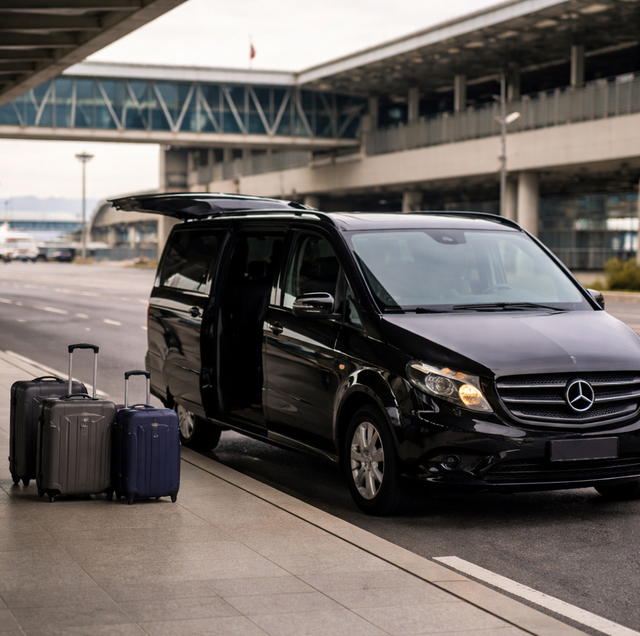
You clear baggage claim at Phoenix Sky Harbor, roll your bags out to the curb, and open the rideshare app. Your destination is not across town. It is Sedona, roughly 115 miles and two to two and a half hours north on I-17, climbing out of the desert floor toward red rock country. The first driver accepts, then cancels. The second sees how far it is and never responds. A third is nine minutes out, then twelve, then fifteen. That gap between landing and actually moving is where the choice between a private airport transfer and a rideshare stops being about the app in your hand and starts being about the length of the trip and how much is riding on it.
Rideshare is a good tool for what it was built to do: short, dense, in-town rides where another car is always a few blocks away. A long intercity run out of the airport is a different kind of trip, and the two options behave very differently once the distance and the stakes climb. The question is not which service is better in the abstract. It is which one fits a two-hour-plus drive into northern Arizona, and where the line sits between "just grab a car" and "arrange this ahead."
A Short Hop and a Long Haul Are Different Problems
A rideshare works on real-time supply. When you request a car, the app looks for a driver near you who is willing to take the trip right then, at whatever price the moment sets. In a dense grid, that balance is easy to strike, so the wait is short, and the fare is predictable enough. Point that same system at a long haul and every part of it gets shakier. Fewer drivers want to give up two-plus hours and drive back mostly empty, prices can swing with demand, and the ride you thought you had can evaporate with a tap of "cancel."
A private airport transfer flips the order. Instead of finding a ride the instant you need it, you arrange the ride before the trip, and a specific driver and vehicle are held for your pickup. The commitment is made in advance, not negotiated at the curb. For a quick trip, that certainty is a nice-to-have. For a long drive with a schedule attached, it changes the whole experience of arriving.
Private Transfer vs Rideshare at a Glance
| Factor | Private Airport Transfer | Rideshare |
|---|---|---|
| Getting a ride at pickup | Confirmed and assigned before you fly | Depends on a driver accepting the moment you request |
| Flight delays or early arrival | Driver tracks the flight and adjusts the pickup | You rebook after you land, into whatever supply exists |
| Finding your ride | Meet-and-greet: the driver meets you and helps to the vehicle | You locate the rideshare zone and hunt for the plate yourself |
| The long fare | One driver and one vehicle for the whole two-plus hours | Any driver can decline or cancel a long run; surge can move the moment you book |
| Luggage and group | Vehicle sized to your bags and party, from sedan to SUV to van | Whatever car arrives; trunk space and seats are not guaranteed |
| The desert route | Local driver who runs I-17 and the Rim grades daily | Driver may not know the mountain route or the conditions |
The Ride You Can Count On Being There
The single biggest difference on a long trip is whether the pickup actually happens. With a private transfer, the ride is booked and confirmed ahead of time. A driver is assigned to you, the pickup time is set, and the vehicle is committed to that run and no other. Nobody is deciding in the moment whether your trip is worth taking.
Rideshare gives you no such guarantee, and the odds tilt against you exactly where you feel it most. A driver who accepts a Sky Harbor request and then realizes it is a two-hour one-way to Flagstaff has every reason to cancel and wait for a shorter, easier fare closer to town. That is not bad luck; it is the math of the platform. Now stretch that uncertainty to the other end of the trip. Rideshare and taxi coverage in Sedona and the Verde Valley is thin and unpredictable even in good conditions, so a ride you counted on for the trip back to the airport may simply not be there when you open the app. A pre-booked transfer removes that gamble at both ends, which is why travelers who cannot afford to be stranded tend to arrange the ride rather than chase it.
Flight Tracking and a Driver Who Meets You
Landing rarely goes exactly to schedule. Flights push back at the gate, catch a tailwind and arrive early, or sit on the tarmac while you watch your plan slip. A private transfer is set up for that. The driver actively monitors your flight, so an early touchdown or a long delay re-times the pickup instead of blowing it up. You are not standing at the curb re-requesting a car while the fare climbs, and no driver is circling the terminal running up a wait because you are still at baggage claim.
There is also the meet-and-greet, which matters more than it sounds when you have been traveling all day. Rather than decoding Sky Harbor's rideshare pickup zones, crossing to a garage level, and matching a license plate in a line of identical cars, you are met by your driver, who helps with the bags and walks you to the vehicle. On a rideshare pickup, all of that coordination falls on you, at the end of a flight, often in an unfamiliar terminal. For a first-time visitor arriving at a busy airport, being met by name is the difference between the trip starting smoothly and starting with a scramble.
One Driver, One Vehicle, the Whole Way North
A two-and-a-half-hour drive is not a trip you want to hand to chance. With a private transfer, one professional driver in one vehicle carries you the entire distance, from the Sky Harbor curb to your door in Sedona, Flagstaff, or the Verde Valley. The ride is continuous, the vehicle is the one you booked, and the person at the wheel is committed to the whole run.
Rideshare cannot promise that. Even setting aside the risk of an outright cancellation, a long fare depends on a driver willing to take it, and pricing on the platform can surge with demand in ways that make a driver think twice about a run that pulls them far from their home area. If a driver declines, you are back to requesting, and each new request is a fresh roll of the dice on who accepts and how far out they are. What should be a single, planned leg becomes a series of separate bets. For an airport transfer where the whole point is a calm ride to your destination, that unpredictability is the opposite of what you want.
Room for Bags and the Whole Group
Long trips come with real luggage. A week in northern Arizona, a wedding party, a family with strollers and coolers, camera gear for the Grand Canyon: it adds up, and it has to fit. A private transfer matches the vehicle to the load. You book a sedan for a pair traveling light, an SUV when there are bags and a little more room to spread out, or a van for a larger group, and the driver assists with the luggage at both ends.
With rideshare, you take the car that arrives. Request a standard ride for four people with a week of luggage, and you may find the trunk cannot hold it, which means canceling and re-requesting a larger vehicle, if one is even available, and often waiting again. Split a group across two cars to make everyone fit, and you lose the driver you can call, the shared conversation, and any certainty that both cars take the same route and arrive together. On a long haul with a group, the difference between one right-sized vehicle and a guessing game at the curb is the difference between the trip starting well or starting frazzled.
Consistency on a Long Desert Drive
The route itself is the last, and maybe the most underrated, reason distance changes the decision. The drive north gains thousands of feet as it leaves the desert for the pines, and the conditions where you get out can look nothing like the ones where you got in, whatever the month. A sudden squall that cuts visibility or a slick grade near the Rim turns a routine two hours into a drive that rewards a steady, familiar hand and punishes a guess. The grades are long, the traffic moves fast, and the weather does not always match the forecast you checked at the gate.
A local professional driver who runs these roads daily is the value here in either season. They know where the interstate slows and what the Rim conditions tend to do when the sky changes. A rideshare driver who happened to accept an unusually long fare may be seeing the route for the first time, on a mountain highway, with your trip depending on it. For a short in-town ride, route familiarity barely registers. For two hours of interstate and canyon driving, a steady, experienced hand behind the wheel is what you are glad to have when the weather turns.
Deciding by Trip Length and Stakes
The clean way to choose is to weigh two things: how long the ride is and how much it costs you to get it wrong. A short, low-stakes hop, say a quick run from Sky Harbor to a hotel in Mesa with a light bag and a flexible afternoon, is the kind of trip rideshare handles fine, and grabbing a car in the moment is reasonable. The calculus changes as the distance grows and the stakes rise. A two-hour-plus drive to Sedona or Flagstaff, an early flight you cannot miss on the way back, a group that has to arrive together, a wedding or an event with a fixed start time, luggage that has to fit the first time: each of those tips the decision toward a ride that is confirmed, tracked, and held for you.
So sketch the trip before you decide. If it is short, casual, and easy to redo when a driver cancels, the app is a fair bet. If it is long, timed, group-sized, or too important to leave to whoever happens to accept, arrange the transfer ahead and let the certainty do the work. The longer and higher-stakes the run, the more a private transfer earns its place.
Frequently Asked Questions
Yes, and the overnight hours are where the gap between the two options is widest. Private transfer service runs around the clock, so a driver is confirmed for a 4 a.m. departure to catch a first flight out of Sky Harbor, or a pickup for a late-night landing, the same way as any daytime run. Rideshare supply, by contrast, thins out sharply overnight and even more so up in Sedona and the Verde Valley, where cars are scarce at the best of times. A pre-arranged pickup means you are not standing outside a dark terminal at 1 a.m. watching the app search, which is exactly when a no-show hurts most.
Because the driver is tracking your actual flight rather than a booked clock time, a delay simply re-times the pickup. You do not need to cancel and rebook. The one situation worth a quick call is a diversion that lands you at a different airport altogether, since the driver is planning around Sky Harbor. A short message to let the dispatcher know where you actually touched down lets them adjust the plan rather than sending a car to the wrong terminal. Flagging an unusual itinerary when you book, a tight connection, or a history of delays on that route gives them room to build in a buffer.
Group size matters less than distance and stakes. A single traveler on a two-and-a-half-hour run to Sedona still gets the confirmed pickup, the flight tracking, and the driver who knows I-17, and those hold their value whether the vehicle seats one person or seven. Where a solo carry-on trip might lean toward rideshare is a short, flexible hop close to Phoenix, like Sky Harbor to Tempe or Mesa, where cars are plentiful, and a cancellation costs you a few minutes rather than your whole plan. The test is the trip, not the party size.
Sometimes, if a willing driver is nearby when you request, but the return leg is the quieter trap. Getting a car out of the airport is the easier half, because that is where drivers cluster. Getting one back from Sedona, Williams, or the Grand Canyon, where rideshare coverage is thin and sometimes absent, is far less certain, and a one-way that stranded you at the far end is a long way from another option. Booking a round-trip private transfer, or at least arranging the return in advance, closes the gap the app leaves open on the way home.
Sooner is safer, and the reason is availability rather than paperwork. Because one vehicle is held for your specific run, popular travel windows fill: holiday weekends, the spring and fall peaks around Sedona and the Grand Canyon, and any date with a wedding or an event pulling several bookings at once. Reserving well ahead locks in the vehicle and time you want and gives the dispatcher room to plan the driver's day around your flight. A last-minute request can often still be filled, but the earlier you arrange it, the less you leave to chance.
They handle it better than an app can, because a person is coordinating the pickups instead of each traveler solving it alone. Staggered arrivals can be met flight by flight, or a driver can wait a reasonable window for a group landing close together, so everyone rolls out in one vehicle rather than splitting across separate rideshare cars that scatter on the drive north. Share each flight number and arrival time when you book, and let the dispatcher build the timing. That is coordination a rideshare, matched one car to one request in the moment, is simply not designed to do.
Book your Sky Harbor transfer before you fly — one confirmed driver and vehicle for the whole run north. Western Express Shuttle Service and Tours serves Sedona, Flagstaff, Phoenix Sky Harbor, and northern Arizona's Verde Valley and Rim Country. Call (928) 202-4071.
