
Private Shuttle or Multiple Rideshares? Keeping a Group Together
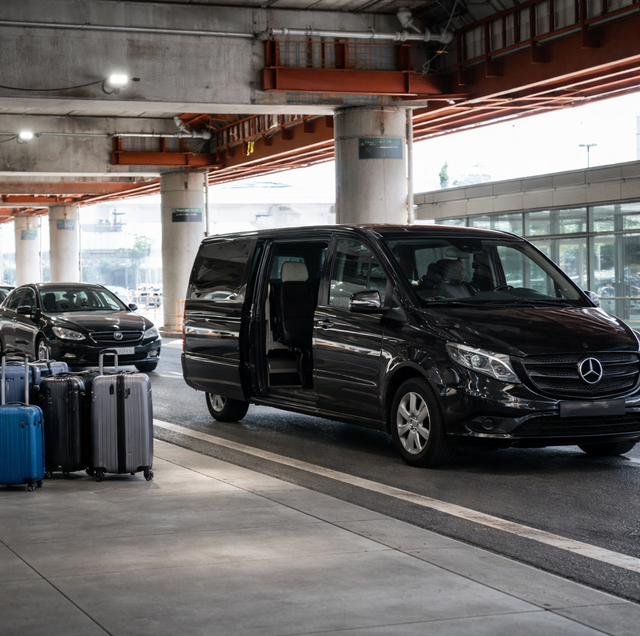
Picture eleven of you on the sidewalk outside Terminal 4 at Phoenix Sky Harbor after a group flight lands. The plan sounded easy: split into three app-based cars and regroup at the hotel up in Sedona. Then one ride cancels at the curb, the second is nine minutes out and climbing, and the driver who does pull up has never run the 115-mile route into the Verde Valley and would rather not take it. Fifteen minutes later, four of you are already on I-17 and the rest are still standing with the luggage, texting a group thread that has become a small crisis.
That is the choice most group organizers are really weighing, and it is not about which option is fancier. It is about whether your group stays one group. A single private shuttle keeps everyone in one vehicle, on one clock, with one driver and one number to call. Splitting into several rideshares means several cars, several drivers, several arrival times, and no one person holding the whole plan together. For a party of roughly five to fourteen, that difference decides how the day actually goes.
The Two Options Side by Side
| Factor | One Private Shuttle | Multiple Rideshares |
|---|---|---|
| How the group travels | Everyone rides together and arrives together in one vehicle | Cars come separately, so the group splits across the road |
| Group size | One van commonly seats 11 to 14 with room for bags | A standard car holds up to four riders, a larger option about six, so a big group needs three or more cars |
| The driver | One professional who runs these northern Arizona routes daily | A different driver each ride, often unfamiliar with a long mountain run |
| Luggage and gear | Cargo space planned for suitcases, coolers, golf clubs, or ski gear | Trunk room per car is limited, and oversized gear may be turned away |
| Peak-time reliability | Booked ahead and confirmed, so a demand spike does not change your pickup | Cars get scarce or slow when demand surges, with cancellations at the worst moment |
| Who you contact | One dispatch line and one driver's number | No single point of contact; each rider manages a separate app |
| Best suited to | Events, weddings, corporate outings, airport groups, multi-stop days | A solo rider or a pair on a short in-town hop |
Staying on One Schedule
The moment a group splits across several cars, it stops moving as a unit. Each app assigns whatever driver is nearest, so the cars leave at different minutes, take slightly different lines, and hit the road in a loose string rather than a convoy. On a short cross-town trip that barely matters. On a two-and-a-half-hour climb up to Sedona or Flagstaff, small gaps stretch into real ones: one car stops for gas, another for a restroom, a third gets waved onto a detour, and by the time you reach the hotel the group is spread across a forty-minute window.
A private shuttle collapses all of that into a single departure. Everyone loads at the same curb, the doors close, and the group arrives as the group. There is no roll call at the destination, no waiting on the two riders whose driver took a wrong exit near Camp Verde, no one sitting alone in a lobby wondering where the rest went. For a schedule that has a hard edge, a dinner reservation, a tour start, a ceremony, a boarding time, one vehicle on one clock is the version that holds.
The same holds on the return leg. When a group of ten tries to summon rideshares out of a restaurant in Old Town Cottonwood or a trailhead near Sedona at the same moment, the app is dividing a thin pool of local cars among all of you at once. A pre-booked van is already there, staged and waiting, because it was never released to another rider.
One Driver Who Knows the Route
Rideshare coverage in northern Arizona is thin and unpredictable once you leave the Phoenix metro, and the driver who accepts a long run to Sedona or the Grand Canyon may be doing it for the first time. The pull north out of the Phoenix basin toward Sedona, Flagstaff, or the Grand Canyon climbs thousands of feet onto the high country, and the weather up top rarely matches the forecast down at the curb. When a sudden downpour or a slick patch near the Rim forces a slowdown, one van keeps the whole group moving together on the driver's judgment, instead of scattering the party across several drivers who each react to the same surprise differently. A driver who runs these roads daily reads them differently than one following a phone for the first time in weather they did not expect.
With a private shuttle, you get the same professional for the whole trip, someone who knows where the grade steepens, where the passing lanes are, and how long the climb honestly takes rather than what an app predicts. Across multiple rideshares, you inherit a different stranger each time, with no way to request the one who handled the drive well.
Room for the Luggage and the Gear
A group rarely travels light. Airport arrivals come with checked bags and carry-ons, a wedding party has garment bags and gifts, a golf trip has bags and a cooler, and a ski group has boards and boots. A standard app car has a trunk sized for a couple of suitcases, so the bags become the hidden constraint: a group that fits four to a car by seats may still need an extra vehicle purely for the luggage, and oversized gear can be refused at the curb with no warning and no backup.
A passenger van is built around the cargo problem. The same vehicle that seats eleven to fourteen has planned space for the bags behind and beside the passengers, and the driver assists with loading rather than leaving you to wedge cases into a sedan trunk on the shoulder. If you are carrying something bulky, clubs, a folded stroller, tour equipment, you tell dispatch when you book and the vehicle is sized for it ahead of time, not negotiated with a driver who did not sign up for it.
One Point of Contact Instead of None
Here is the quiet failure that catches groups off guard: with several rideshares, no one is in charge of the whole trip. Each rider has their own app, their own driver, their own estimated arrival, and if one car cancels, there is no dispatcher to send another. The organizer becomes an air-traffic controller working from a group text, chasing five moving dots that do not talk to each other.
A private shuttle runs on single dispatch. One office holds your booking, one driver has your details, and one number reaches a person who can actually adjust the plan. For an airport group, that means meet-and-greet service, where the driver tracks the flight and is waiting when you clear baggage claim, so an early landing or a tarmac delay is handled rather than penalized. If the schedule shifts, you make one call instead of eleven. That single line of contact is the difference between a plan someone is running and a plan that is running you.
Peak-time reliability follows the same logic. When demand surges around a holiday weekend, a big event, or a late-night rush, app-based cars in a small market get scarce and slow, and the ride you were counting on can vanish minutes before pickup. A shuttle reserved in advance is committed to your group and off the general pool, so a demand spike elsewhere does not decide whether your vehicle shows up.
Why Events and Outings Lean This Way
Some trips almost demand a single vehicle, and they share a trait: the group has to be somewhere together, on time, and composed when it arrives.
A wedding block: guests who barely know each other should not be sorting themselves into strangers' cars in the dark on an unfamiliar mountain road. One shuttle keeps the party together and delivers everyone to the ceremony in one settled group.
A corporate outing: a team heading to an offsite, a client dinner, or a Verde Valley wine day is working the whole time it travels. A van lets the group keep talking, keep planning, and arrive as a unit, which a scatter of separate cars quietly undoes.
A multi-stop day: a sightseeing loop through Sedona's red rock country, a run up to Jerome, or a tasting route around Page Springs means parking and waiting at each stop. Re-summoning several rideshares at every winery is its own part-time job, while one held vehicle waits and moves the group at your pace.
In each case, the value is not just the seats. It is that the group never fragments, and no one is left managing logistics when they came to enjoy the day.
When Splitting Into Rideshares Is Fine
Multiple rideshares are not wrong for every trip. If two or three of you are making a short hop within Phoenix, or a pair needs a quick lift across Flagstaff, app cars are quick to summon and suited to it. The choice tilts when the group grows past what one or two cars hold, when the drive is long and rural, when luggage is heavy, or when arriving together matters. A single traveler on a five-minute ride and a group of twelve heading two hours up the Rim are different problems, each with its own clean answer.
Matching the Ride to the Group
The decision comes down to a short, honest read of your own trip. Count the real head count and the bags, not just the seats. Ask whether the group has to arrive together and on time, or whether a loose spread of arrivals is fine. Look at how long and how remote the drive is, and whether anyone is around to manage the plan if a car falls through. If the answers point to a large party, a long route, real luggage, and a schedule with an edge, one private shuttle with one driver and one dispatch line is the version that keeps the day whole. If it is a couple of people on a short, forgettable hop, a rideshare does the job, and you move on. The size of the group, the length of the road, and the stakes if anyone arrives late are what tip it.
Frequently Asked Questions
A passenger van commonly seats somewhere between eleven and fourteen with room for luggage, which covers most single-group trips. You move to two vehicles when the party runs past that count, when riders are being collected from more than one pickup point at the same time, or when the group wants to split by schedule, say an early-departure crowd and a later one. Two vans running together also clear a large group in one wave instead of one van making a second loop. When you book, give dispatch the exact head count and the bag load, because a fourteen-seat van packed with fourteen people and their ski gear may need a second vehicle for the luggage alone.
A private driver holds for your group rather than a meter, so a short lag at a trailhead, a restroom stop, or a slow bag carousel does not cost you the vehicle. When you book, tell dispatch if one traveler is on a later connecting flight, and the plan is set one of two ways: build a reasonable wait into the pickup window so the van holds for everyone, or, when the gap runs an hour or more, send the main group ahead and arrange a second pickup for the late arrival rather than keeping the whole party standing at the curb. Because that call is made in advance, the driver is not improvising at the airport, and the rest of the group is not stuck waiting indefinitely on one delayed flight.
Usually yes, and it runs through the same dispatch line that answers around the clock, so a late-night or early-morning change reaches a person rather than an app queue. If you want to ADD a stop, a quick pharmacy run, a lunch halt in Camp Verde, an extra overlook, tell the driver or call dispatch: on a shuttle booked by the block of time it slots into the schedule, while a tight point-to-point transfer with another booking behind it may only allow a short one. If you CANCEL a planned stop, the driver simply skips it, and the group reaches the destination sooner. Either way, one office holds the whole booking, so the change is logged once instead of being renegotiated with a new stranger at every turn.
This is a common gap. App-based rides rarely guarantee a child seat, and a dedicated car-seat option is unavailable in many markets, so a family risks a driver arriving with nothing suitable for an infant or toddler. With a private service, you raise it when you book, telling dispatch the child's age and whether you need an infant seat, a convertible, or a booster, so it is planned rather than left to the curb. If you would rather bring your own seat, a van has the space and time to install it properly, which is hard to manage while a metered app car waits.
That is where multiple rideshares get tiring fast, because you re-summon a car at every stop and gamble on one being nearby in a small market. A private shuttle is held for the block of time, so the driver parks and waits at each winery, gallery, or overlook, and the group moves on its own pace without arranging a fresh pickup between stops. A Verde Valley tasting route or a Sedona sightseeing loop can involve five or six real stops, and having the same vehicle wait through each one is the whole point of booking by the day instead of by the ride.
At that size, it depends on the trip more than the head count. Five or six people can fit in a single larger app vehicle, but the luggage often decides it: five airport arrivals with checked bags frequently need a second car anyway, which puts you back into a split group with two drivers and two arrival times. If the drive is long or rural, or arriving together matters, one van keeps the small group whole with room for the bags. For a quick in-town errand with light luggage, a single larger rideshare is usually enough.
Moving a group of five to fourteen? Call to book one private shuttle that keeps everyone together, on schedule, and with room for the luggage. Western Express Shuttle Service and Tours serves Sedona, Flagstaff, Phoenix Sky Harbor, and northern Arizona's Verde Valley and Rim Country. Call (928) 202-4071.
